Madagascar is one of the last great biodiversity frontiers on Earth — an island where ancient forests, towering baobabs and rare wildlife exist nowhere else on the planet.
At Madagascar Classic Collection, our camps were created not only to reveal these extraordinary landscapes, but to help protect them. Through responsible tourism, community partnerships and collaboration with leading conservation organisations, every journey contributes to safeguarding Madagascar’s remarkable natural heritage.
When you travel with us, you become part of the story of protecting Madagascar.
Restoring critical habitat in the Spiny Forest ecosystem of southern Madagascar.
Community partnerships that support sustainable livelihoods and long-term conservation.
Supporting reforestation, research, environmental education and biodiversity protection.
Reducing charcoal consumption and helping protect Madagascar’s fragile forests.
Supporting reforestation, research, environmental education and biodiversity protection.
Cultivating locally sourced endemic species to restore biodiversity and strengthen Madagascar’s unique ecosystems.
Madagascar is unlike anywhere else on Earth.
Separated from the African continent for over 80 million years, the island evolved in isolation, creating a living laboratory of life found nowhere else. Towering baobabs, ancient forests and dramatic limestone tsingy formations shelter an astonishing array of wildlife — from dancing sifakas and elusive chameleons to rare birds, reptiles and plants.
Nearly 90% of Madagascar’s species exist nowhere else on the planet.
But this remarkable natural heritage is also fragile. Across the island, forests face increasing pressure from deforestation, climate change and the economic realities faced by rural communities.
At Madagascar Classic Collection, we believe that responsible tourism can be one of the most powerful tools for conservation. Our camps were created not only to reveal Madagascar’s wild beauty, but to help protect it.
For us, conservation is not philanthropy, It is the foundation of how we operate.
Every guest who travels with Madagascar Classic Collection becomes part of a larger conservation story.
Through a dedicated conservation levy and long-term partnerships with local communities and environmental organisations, tourism directly supports programmes that protect wildlife, restore forests and strengthen sustainable livelihoods.
To date, guest contributions have helped fund initiatives including:
These initiatives demonstrate how thoughtfully managed tourism can create tangible conservation impact across Madagascar.
While our lodges operate within some of Madagascar’s most remarkable ecosystems, our conservation efforts extend far beyond their boundaries.
Madagascar Classic Collection partners with leading Malagasy and international conservation organisations, helping support biodiversity protection across multiple landscapes on the island.
Through these partnerships, tourism contributes directly to scientific research, habitat restoration and community-driven conservation initiatives, ensuring that our impact is national in scope and long-term in vision.
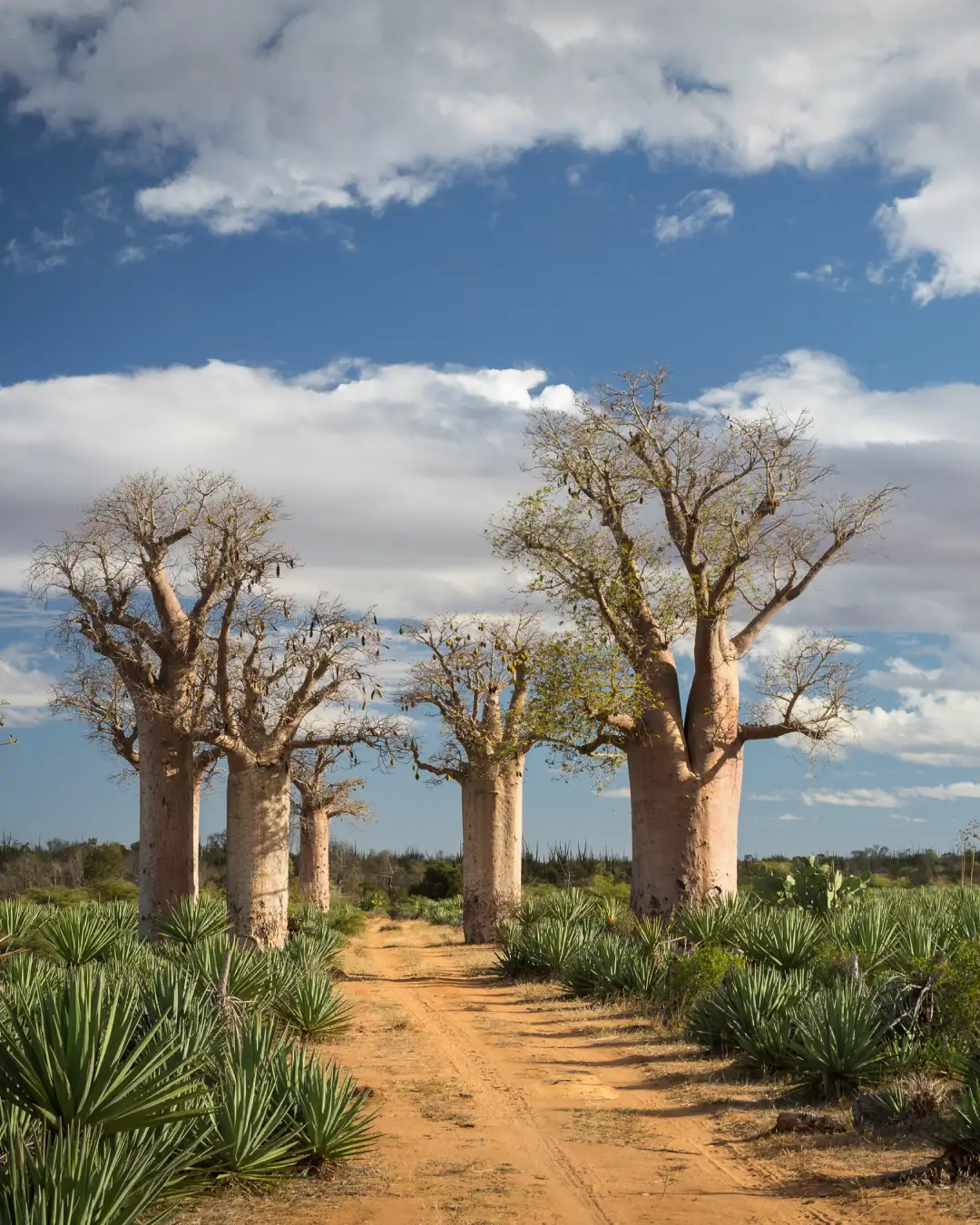
Restoring the Spiny Forest of Southern Madagascar
In the far south of Madagascar lies the extraordinary Spiny Forest ecosystem — a landscape of towering octopus trees, ancient baobabs and resilient wildlife found nowhere else on Earth.
This region is home to species such as the Verreaux’s sifaka, ring-tailed lemur and critically endangered radiated tortoise.
Working alongside 62 villages within the Ifotaka Community, our conservation programmes focus on long-term solutions that protect forests while supporting local livelihoods.
Together we have:
By combining ecological restoration with cultural stewardship, these initiatives ensure that the Spiny Forest can continue to thrive.

Conservation Through Discovery
On Madagascar’s remote northwest coast lies Namoroka Tsingy National Park, one of the island’s least explored protected areas.
Here, jagged limestone pinnacles rise above hidden forests and caves — an environment that still holds scientific mysteries waiting to be discovered.
At Namoroka Tsingy Camp, conservation and exploration go hand in hand. We collaborate with Wildlife Madagascar, whose researchers are based at the camp to study biodiversity and monitor fragile ecosystems.
Their work includes:
One recent milestone was the photographic rediscovery of the Namoroka Leafy Chameleon, a species first recorded in 1980 and only recently photographed again.
Research conducted here contributes to both national conservation planning and global scientific understanding of Madagascar’s wildlife.
Madagascar Classic Collection works alongside respected conservation organisations whose work strengthens biodiversity protection across the island.
Wildlife Madagascar is an international NGO dedicated to community-based conservation, biodiversity research and sustainable ecotourism development.
Researchers work closely with our camps, helping protect habitats while engaging surrounding communities in conservation initiatives and environmental education programmes.
Our partnership with Madagasikara Voakajy supports reforestation in the Andasibe–Mantadia rainforest landscape, one of Madagascar’s most important biodiversity hotspots.
Native tree planting and habitat restoration strengthen forest corridors and protect habitat for endangered wildlife, including several rare lemur species.
Founded by renowned Malagasy scientist Steven M. Goodman, Vahatra advances biodiversity research and conservation across Madagascar.
Together we support reforestation initiatives including native tree planting in the Ambohitantely Special Reserve, one of the last remaining fragments of Madagascar’s high-altitude montane forest.
Our camps are designed to operate with minimal environmental impact while delivering exceptional guest experiences.
Across Madagascar Classic Collection properties we prioritise:
Luxury and sustainability are not opposing ideas — they are part of the same philosophy.
Today’s travellers seek experiences that go beyond exploration.
By choosing Madagascar Classic Collection, guests directly contribute to:
From the Spiny Forest of southern Madagascar to the tsingy landscapes of the northwest, every journey helps safeguard Madagascar’s extraordinary natural heritage.
When you travel with us, you become part of its protection.